20 young women started the training component of the second Young Women Climate Mentorship Programme cohort in Freetown, opening with climate fundamentals and gender responsive climate action.
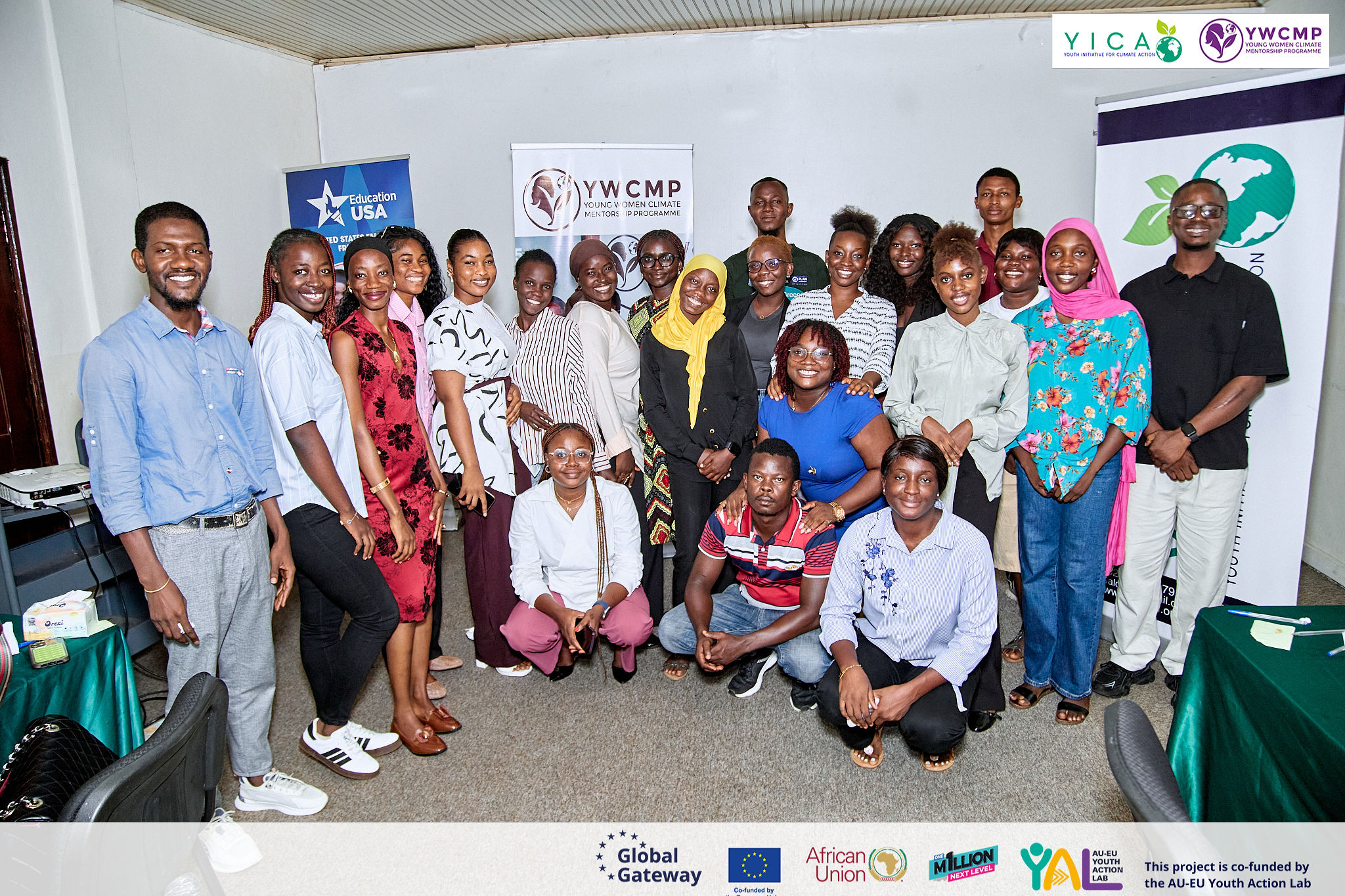
The second cohort of the Young Women Climate Mentorship Programme began its training component on Thursday 13 August 2026 in Freetown, with 20 mentees taking part in a full day of sessions.
The day opened before any teaching with two assessments. Mentees completed a training pretest on climate knowledge and a programme baseline covering the skills the mentorship is designed to build, including public speaking, project design, fundraising and policy engagement. Both instruments will be repeated later in the programme, so YICA-SL can report what changed for each participant rather than describe the training in general terms. The baseline uses a self-assessment scale drawn from the C40 Cities Women4Climate questionnaire, which allows the cohort's results to be read against an existing international reference point.
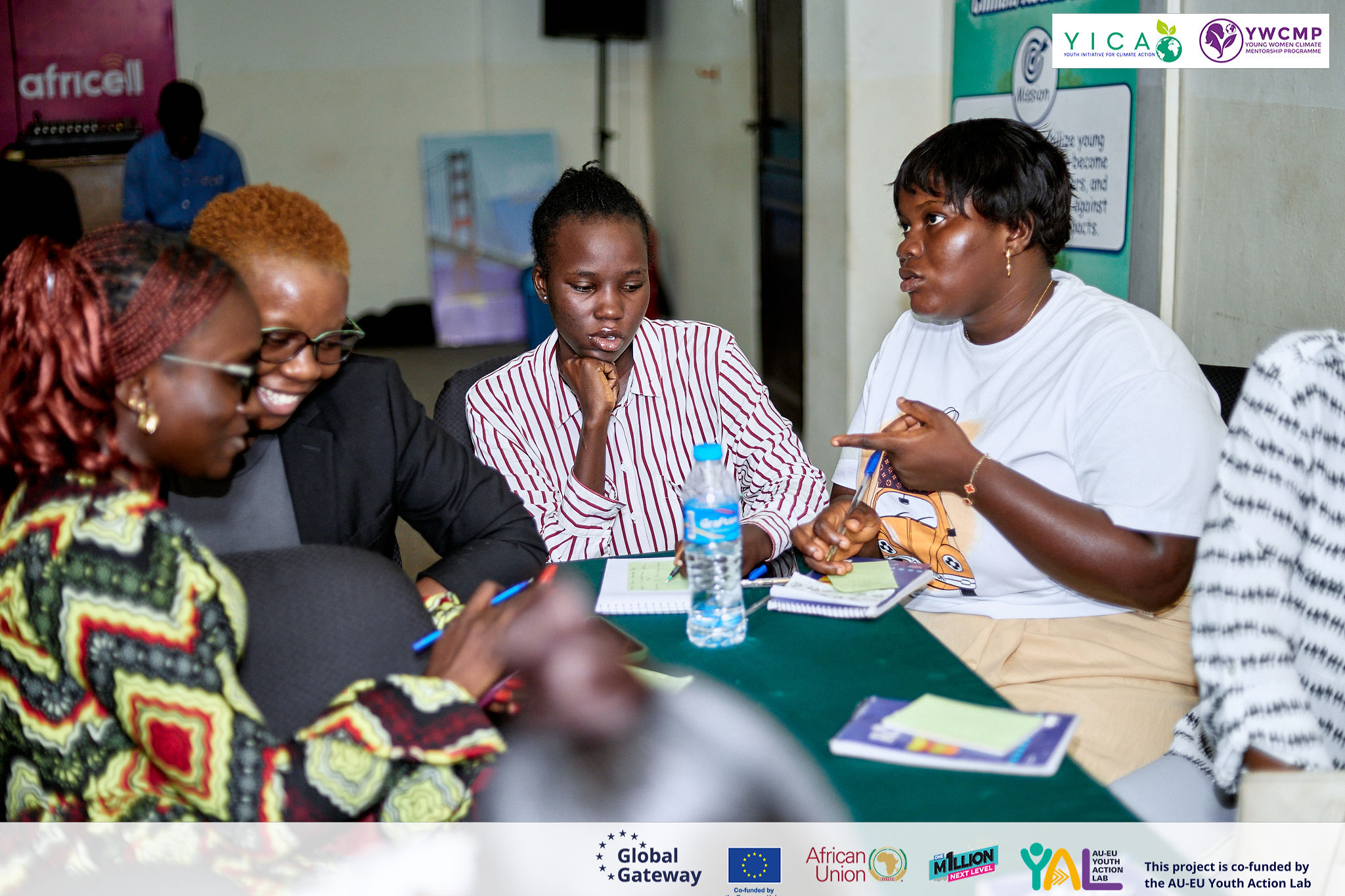
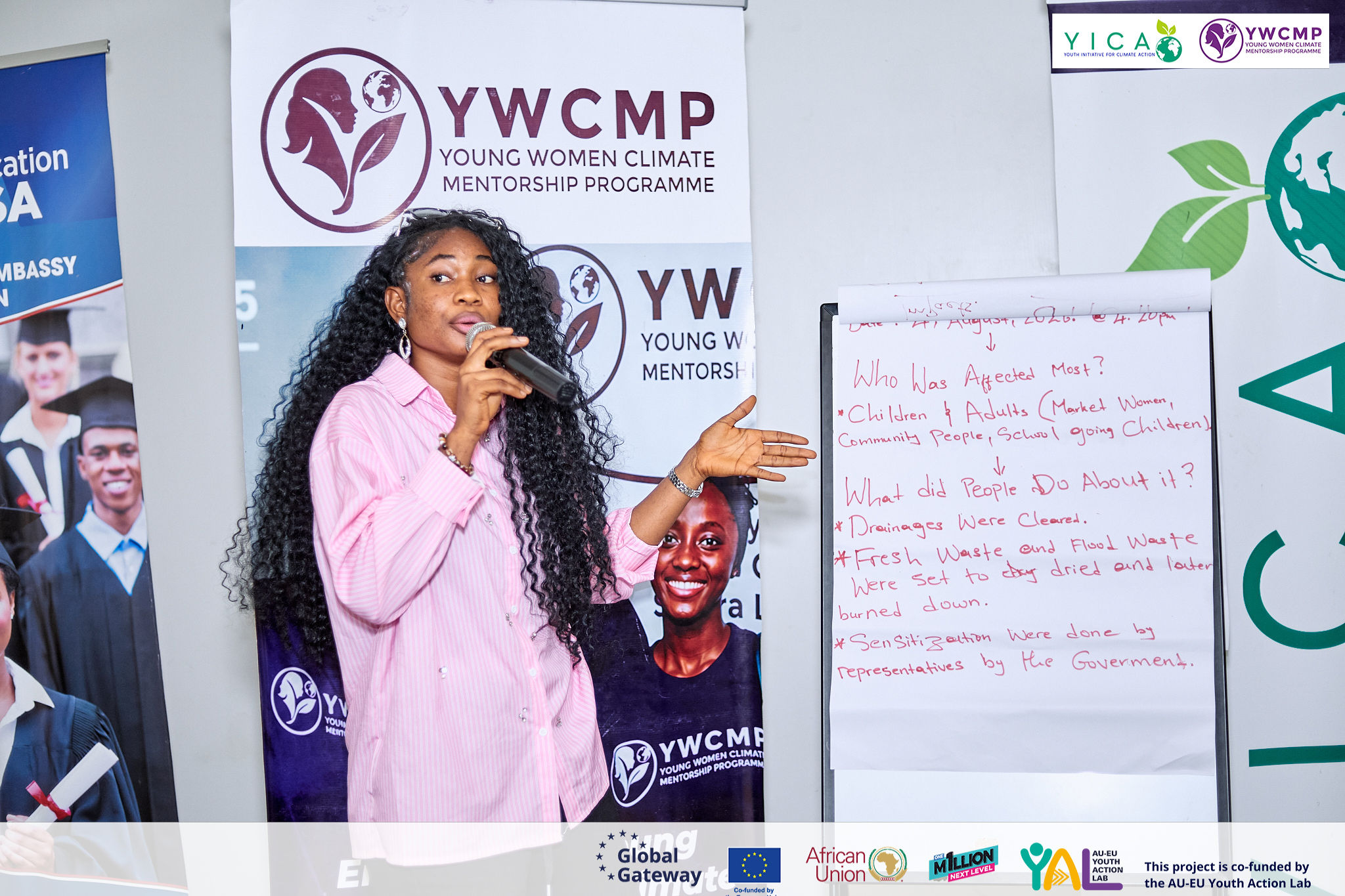
Session 1 covered climate change fundamentals. Facilitated by Foday Kamara, it worked through the greenhouse effect and the observed temperature and rainfall record for Sierra Leone before turning to six impacts the country is already living with. Those are flooding, the Regent landslide, coastal erosion, heat, pressure on farming, and effects on health. Mentees then mapped the climate impacts they have seen in their own communities, which produced material the programme will carry into project design later in the cohort.
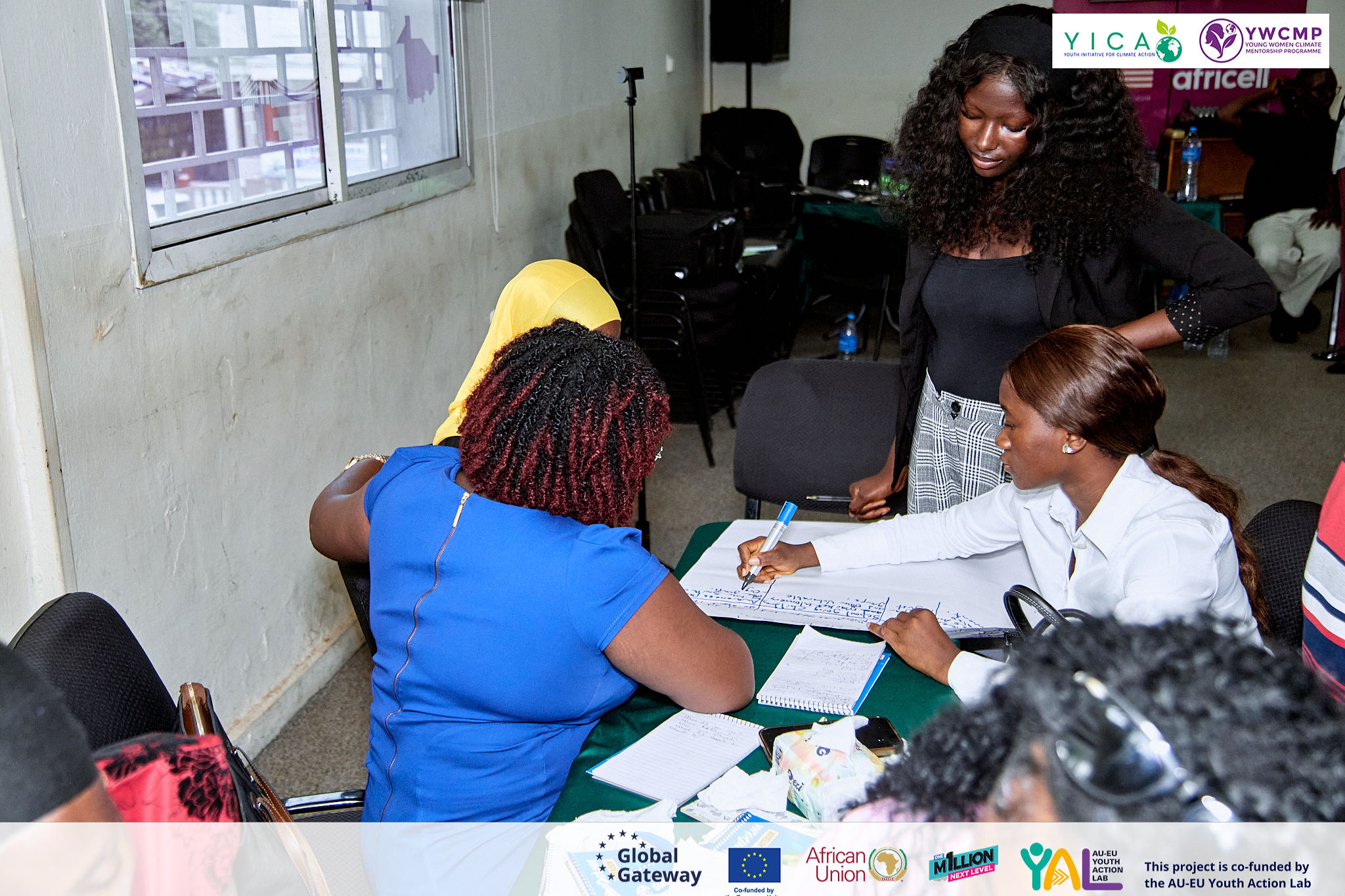
Session 2, facilitated by Yealie Kamara, examined gender justice and climate change. It set out why climate impacts fall differently on women and girls in Sierra Leone, the structures behind that difference, and the policy frameworks young women can hold decision makers to. Mentees worked through a four-step check for testing whether any climate project responds to gender, then applied it in groups to an irrigation project scenario.
Mentees are already paired with their mentors, and one-to-one mentoring runs alongside the remaining training days. Each participant works towards a community climate project, with micro-grant support available to take the strongest proposals into delivery. The first cohort completed this route in February 2026, when twenty young women presented four community-based climate projects at their closing ceremony.
This project is co-funded by the AU-EU Youth Action Lab.